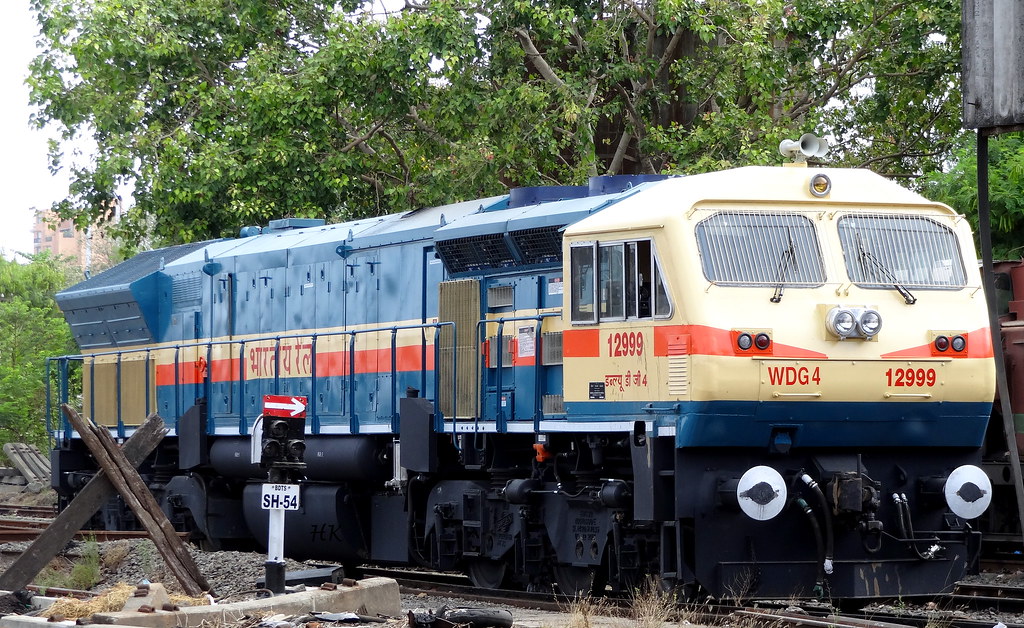
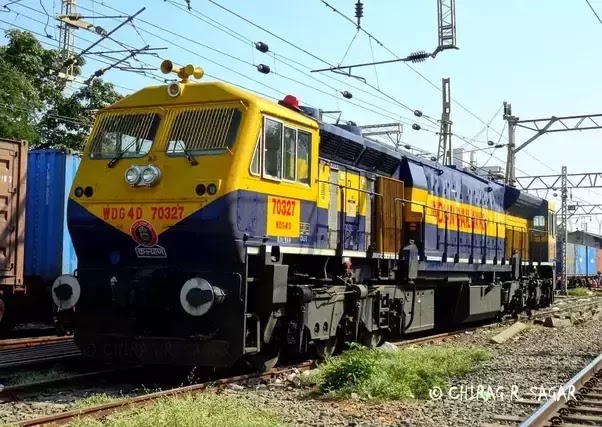
Indian Railways being
one of the biggest transporters of freight and people all over the India. With significant
development in technologies of Indian Railways, it has advanced coaches as LHB
rakes, advanced locomotives along with HOG technologies, better tracks, safer systems
etc. Inspite of all these developments, Indian Railways is still lagging behind
on its freight wagons. The old, outdated wagons are still used by Indian Railways
in these modern worlds causing a major loss in energy and money. These post
aims in development of special type of wagons for Indian Railways which becomes
very useful in transportation of different more goods.
Many different wagons
as BTPN, BOXNHL, BCNA, BCCN etc. are being used by Indian Railways transporting
the raw materials, petroleum, cements, grains etc. Still it becomes difficult
to transport packed foods, vegetables or such items which requires cooling as
there were no air-conditioned wagons present in Indian Railways. Some materials
are required to be transported from North to South which usually takes 2 to 3
days and if we transport such materials, it becomes mandatory to use refrigerated
wagons.
Working of
refrigeration unit:
The cooling and
refrigeration take place by RAC cycle. The compressor compresses the vapor
from low pressure to high pressure supersaturated steam. This steam is condensed
in condenser to liquid state which is throttled to low pressure by capillary tube.
This low-pressure liquid is passes through evaporator causing the required cooling
action. Thus, the RAC system consists of four devices- compressor, condenser,
throttling device, evaporator following the reversed heat engine cycle.


Construction and
working of Refrigerated wagons
The refrigeration
system consists of set of 4 wagons in which the various components will be distributed
as shown in the figure below:
 A: compressor
The wagon 2 of the set
consists of hanging compressor below it where the low-pressure steam will be
converted to high pressure supersaturated steam. This steam is made to passed
through the hanging condenser at wagon 3 where the steam will be converted to
high pressure liquid. The condenser contains the set of cooling fans and blowers
where the flowing air cools the steam to liquid. This high-pressure liquid is
made to passed through the distributer where the pump distributes the coolant
liquid to all four wagons equally. This coolant liquid will be received in four
throttling devices attached to each wagon. The device contains the capillary
tubes wounded in form of spring where the pressure of the liquid is reduced without
causing any change on its enthalpy. Finally, the low-pressure liquid reaches to
the evaporator containing set of zig-zag tubes all around the wagon which
extracts heat from the materials kept inside the wagons and thus makes the
refrigeration effect. Finally, the high temperature, low pressure liquid gets
collected in collector which is then sent to the compressor and the process
repeats.
Advantages of such
systems
1. Due to distributed refrigeration system, it decreases the load or weight
of each wagon thus decreasing the axle load over the rails.
Power supply to the
wagons
As we can see that the
wagons require electricity for its working. This electricity can be supplied either
by batteries or any self-generating unit attached to the wagons. But batteries
cannot work for so long and charging is required at either interval. Also, the self-generation
unit attached will increases the friction and more tractive effort will be
required.
As we know that most
of the freight trains will be shifted to Dedicated Freight Corridor (DFC) once
the project will be completed which are completely electrified routes. Thus the
HOG generation locomotives can be used for such freight wagons which will boost
the economy of the Indian Railways and increases the probability of freight
transportation by rails.
TEXTS: MYSELF
IMAGES: GOOGLE IMAGES
Working of refrigeration unit:


Construction and working of Refrigerated wagons

A: compressor
B: condenser
C: throttling device
D: evaporator
The wagon 2 of the set
consists of hanging compressor below it where the low-pressure steam will be
converted to high pressure supersaturated steam. This steam is made to passed
through the hanging condenser at wagon 3 where the steam will be converted to
high pressure liquid. The condenser contains the set of cooling fans and blowers
where the flowing air cools the steam to liquid. This high-pressure liquid is
made to passed through the distributer where the pump distributes the coolant
liquid to all four wagons equally. This coolant liquid will be received in four
throttling devices attached to each wagon. The device contains the capillary
tubes wounded in form of spring where the pressure of the liquid is reduced without
causing any change on its enthalpy. Finally, the low-pressure liquid reaches to
the evaporator containing set of zig-zag tubes all around the wagon which
extracts heat from the materials kept inside the wagons and thus makes the
refrigeration effect. Finally, the high temperature, low pressure liquid gets
collected in collector which is then sent to the compressor and the process
repeats.
A fan attached at the
top of wagon makes the forced circulation inside the wagons by which the heat
is extracted uniformly from the materials and cold air will be distributed uniformly.
Advantages of such
systems
1. Due to distributed refrigeration system, it decreases the load or weight
of each wagon thus decreasing the axle load over the rails.
2. As more of the components are attached below the wagons, it increases
the carrying capacity of the wagons.
3. As for the four wagons, only one compressor and condenser are used, this
decreases the power consumptions of the wagons.
4. The bottom portion of wagon 1 and wagon 4 are empty. This can be
utilized in instalment of brake systems for the four wagons.
Power supply to the wagons
As we can see that the
wagons require electricity for its working. This electricity can be supplied either
by batteries or any self-generating unit attached to the wagons. But batteries
cannot work for so long and charging is required at either interval. Also, the self-generation
unit attached will increases the friction and more tractive effort will be
required.
This problem can be
solved if we also apply the technique of HOG generation in freight locomotives.
As we know the HOG generation used in passengers’ locomotives to power the
coaches directly by using the 25KV electric supply by the pantograph. The extra
installation of HOG generation unit is to be done in the freight locomotives
similar to passenger’s locomotive.

As we know that most
of the freight trains will be shifted to Dedicated Freight Corridor (DFC) once
the project will be completed which are completely electrified routes. Thus the
HOG generation locomotives can be used for such freight wagons which will boost
the economy of the Indian Railways and increases the probability of freight
transportation by rails.
TEXTS: MYSELF
IMAGES: GOOGLE IMAGES